
Contents
- 1 After tattoo laser removal
- 1.1 An explanation of how laser tattoo removal treatment works
- 1.2 The result stays the same after each laser treatment session
- 1.3 The significance of post-treatment care
- 1.4 What is the duration of laser tattoo removal?
- 1.5 FAQ
- 1.5.1 What should I expect immediately after laser tattoo removal?
- 1.5.2 How do I care for my tattoo after laser treatment?
- 1.5.3 What should I do if I get blisters after laser treatment?
- 1.5.4 Are there activities I should avoid after laser tattoo treatment?
- 1.5.5 How long does it take for a laser to completely remove a tattoo?
After tattoo laser removal
Getting a tattoo removed through laser therapy involves more than just a few sessions at the clinic. It is essential to be aware of the tattoo removal aftermath routine.
After your initial laser tattoo removal treatment, you will better understand what to anticipate for future sessions.
Before starting the process, it is essential to understand clearly what to expect.
Here are some important considerations for preparing for the aftermath of the tattoo removal process.
An explanation of how laser tattoo removal treatment works
You can expect to undergo the same procedure consistently during each laser treatment session.
Let’s reflect on the moment when you first got the tattoo.
When foreign substances such as tattoo ink pigments enter the body, the immune system responds by sending white blood cells. These cells attempt but cannot remove the ink particles, resulting in the tattoo’s permanence.
The laser technician will direct the laser onto your skin during the laser tattoo removal, explicitly targeting the unwanted tattoo. The laser emits light energy penetrating the skin’s dermal layer, rapidly generating heat to break the tattoo ink particles into smaller fragments.
During each laser treatment session, the tattoo removal involves breaking down particles into smaller sizes so they can be excreted.
The result stays the same after each laser treatment session
The first laser tattoo removal session can significantly shock your system. Still, as you progress through the process, your body will gradually adjust to the treatments until your tattoo is completely removed and your skin is fully healed.
The significance of post-treatment care
Adhering to aftercare guidelines is essential for attaining the anticipated outcomes in tattoo removal. Laser tattoo removal represents a joint endeavour between Think Again, the experts in treatment, and you, the specialist in preparation and aftercare. It is crucial to recognise that laser therapy constitutes merely the initial phase in tattoo removal. The calibre of your results will largely hinge on the care you administer to your tattoo before and after laser treatment.
Your body’s inherent healing processes and ink elimination function more effectively when you maintain good health. During and following laser treatment, it’s advisable to either avoid or minimise toxins like nicotine and alcohol, as they impede the immune system. Engaging in physical activity and consuming ample fluids enhances the lymphatic and vascular systems, aiding in the expulsion of ink from your bloodstream.
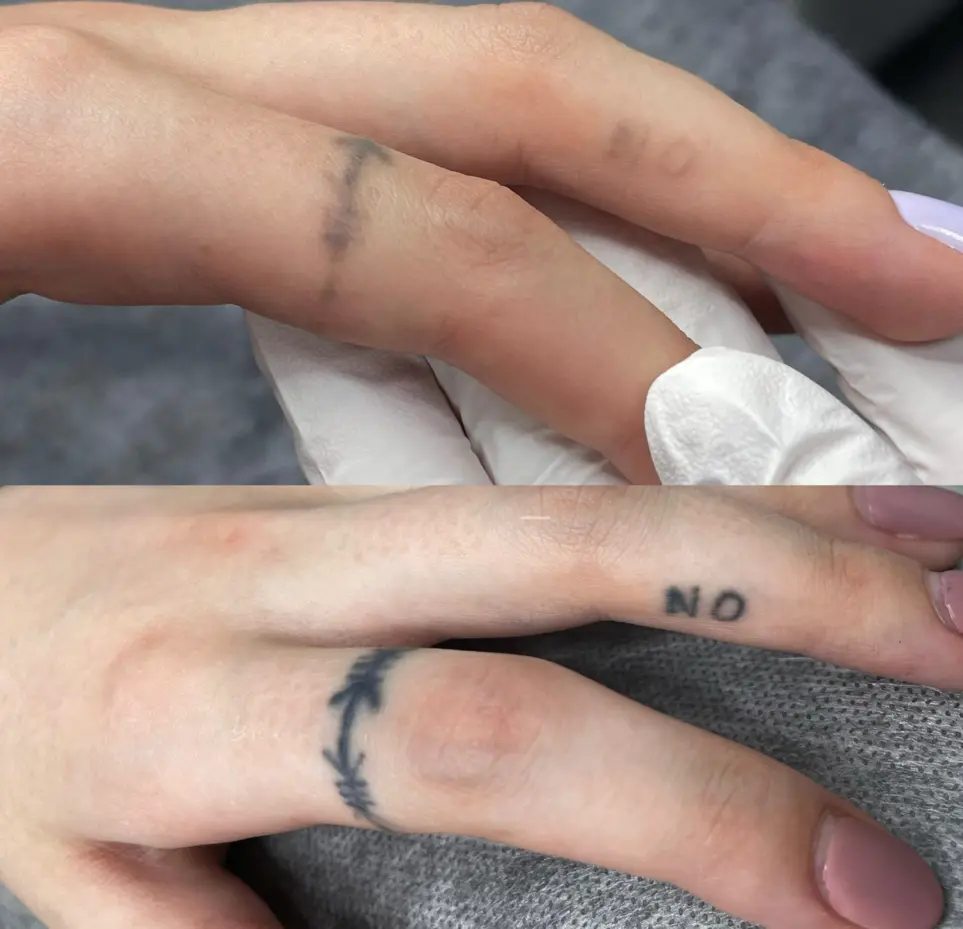
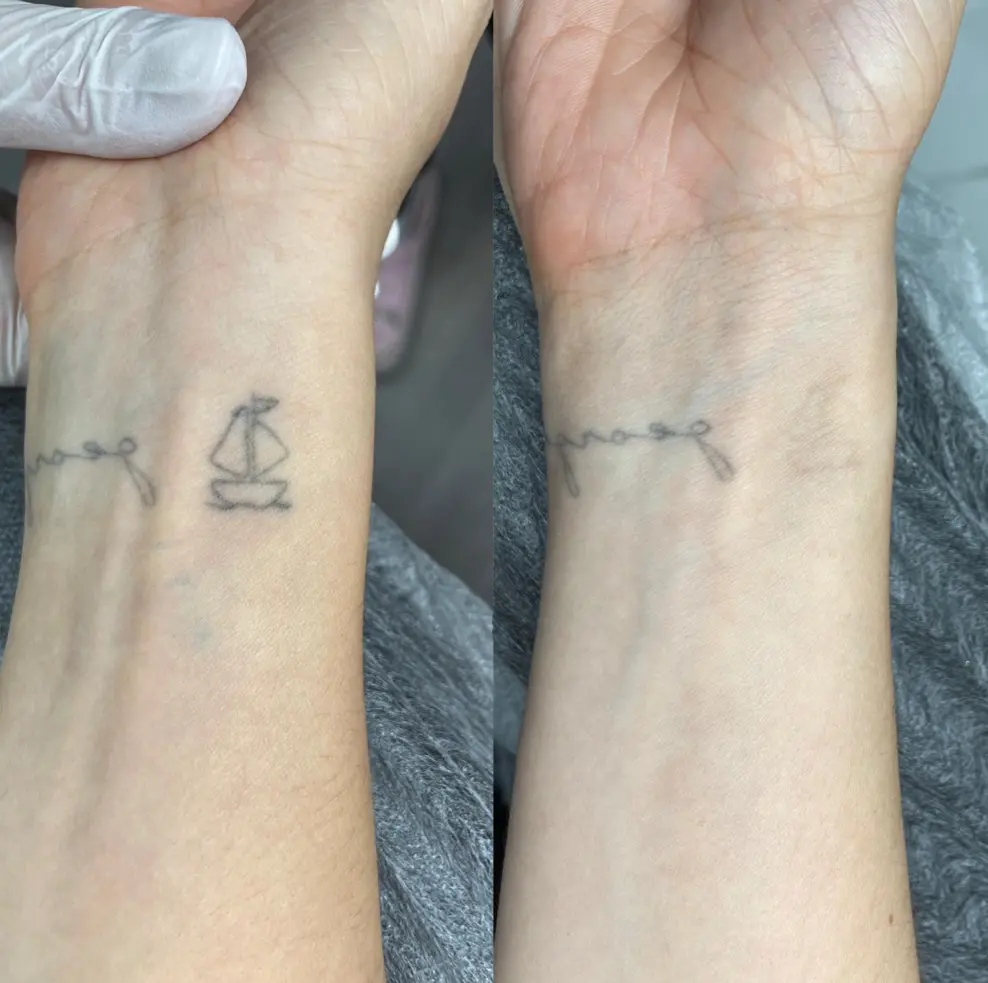

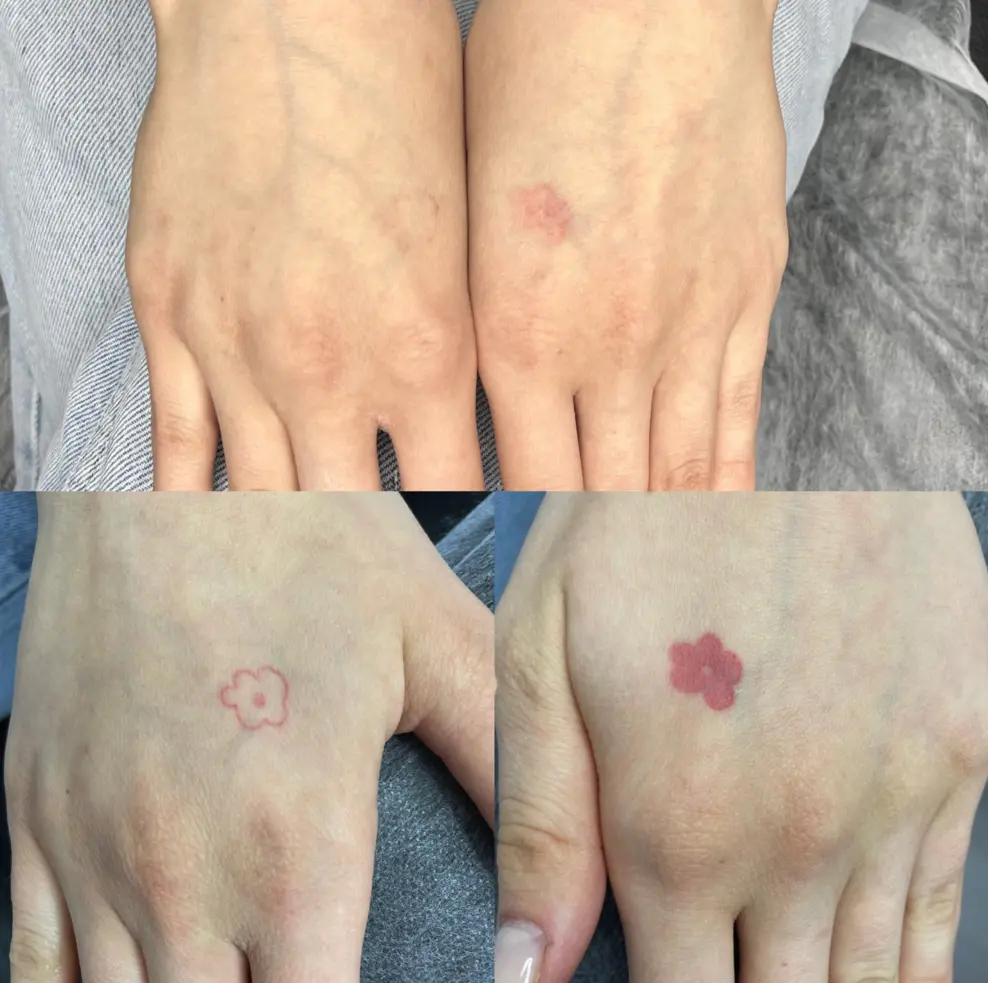
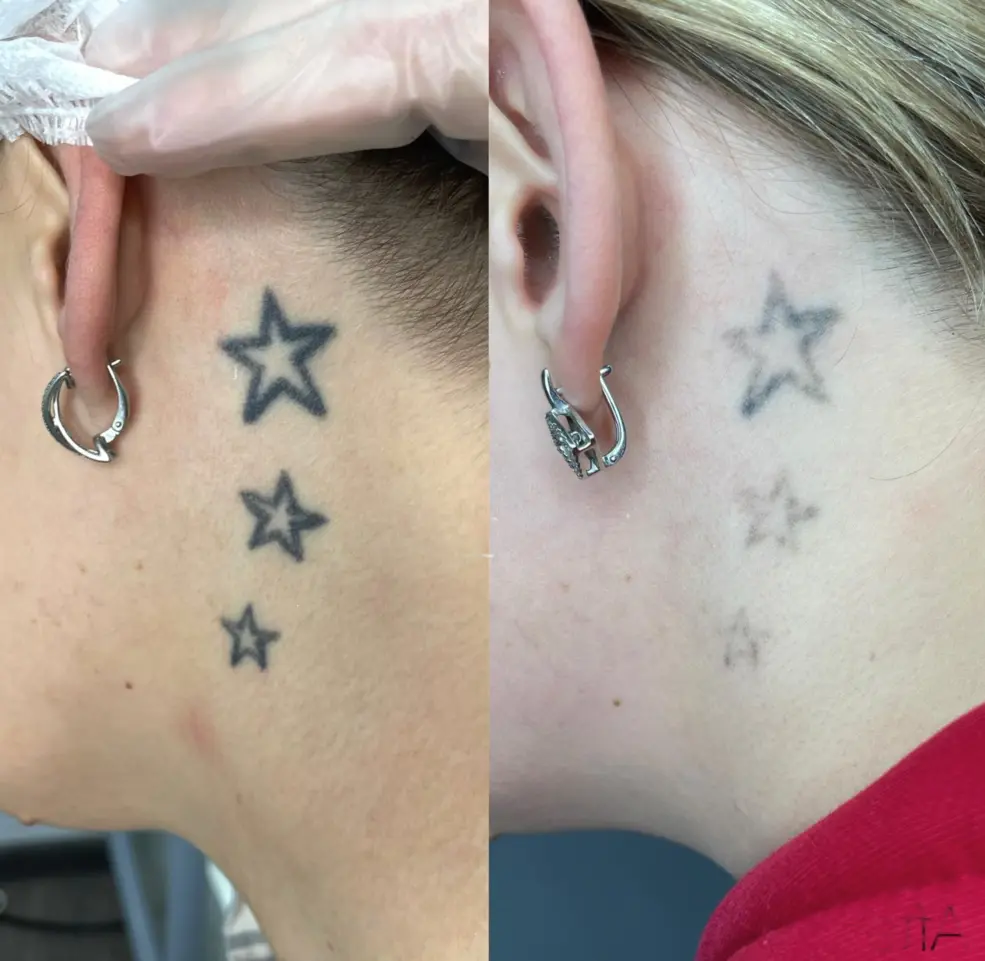
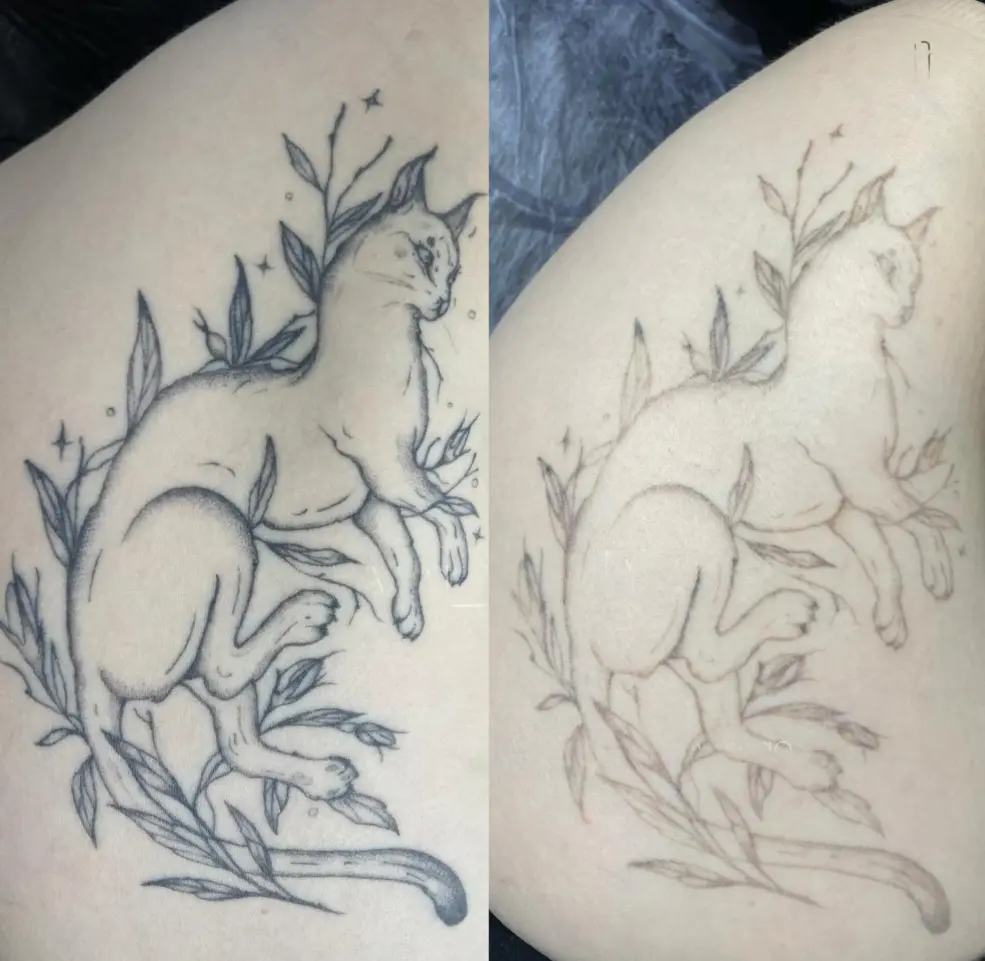
What are the typical outcomes after laser treatment?
During the laser removal of a tattoo, a transient whitening (frosting) of the ink is often observed, signifying that the laser has fragmented the ink. This is due to the release of thermal energy from the ink particles. This frosting effect generally persists for only a few minutes and is expected to fade away before you depart from the clinic.
Once the frosting subsides, your skin might turn red and feel warm, akin to the sensation of a sunburn. This feeling may last from a few hours to several days.
Swelling is a common occurrence following laser treatments. It is the body’s response, attempting to immobilise the affected area. Larger tattoos tend to swell more than smaller ones. Lower body parts and extremities with weaker circulation are more susceptible to swelling. Post-treatment, swelling might follow gravity and move down a limb. This is a normal reaction and will diminish over time.
Bruising is also a frequent side effect of laser tattoo removal, particularly in sensitive areas such as the ribs and inner biceps. It’s a standard part of the healing process and usually resolves within a week or two. There is no cause for alarm.
What is the recommended aftercare for a tattoo after laser treatment?
After your treatment at our clinic, your tattoo will be covered with a soothing gel and a sterile dressing. In certain situations, a gel may be applied without a dressing. Following this, it is recommended that you…
- After treatment, ice the area as soon as possible. Repeat this several times in the next 48 hours. Cooling the area helps the tattoo feel better, look better, and respond better in the following days. You can use covered ice packs directly on the dressing or after removing them, alternating every 15 minutes. If your tattoo is on your arm or leg, try elevating it while icing. Doing this in the first 24 hours reduces swelling and discomfort.
- The dressing should be removed within a few hours, either after the gel escapes, before showering, or before going to bed, whichever comes first.
- It is advised to clean the area with water and gently dry it after removing the dressing. Avoid using soap or body lotions on your healing tattoo. Apply Aloe Vera gel twice daily for at least 48 hours after treatment. This will soothe the area and prevent itchiness. Store the Aloe Vera gel in the fridge for extra soothing. You don’t need to reapply a dressing after removing the original one. However, apply another dressing if your tattoo rubs against clothes or shoes. If you do, apply Aloe Vera Gel underneath and pull it regularly, following the guidelines above.
- Resting and elevating your tattoo during the first 24 hours after treatment can aid healing and minimise discomfort and swelling. If you experience discomfort, you can take over-the-counter pain relief medications like paracetamol, following the instructions on the packaging. It is advisable to avoid aspirin or ibuprofen, as these may increase the risk of bleeding or bruising.
- Post-treatment, you might observe mild scabbing on your tattoo. These scabs result from using a fractional laser, which facilitates healing. They might have a coarse texture, similar to sandpaper, and can persist for up to two weeks in areas with reduced blood flow. It is crucial to refrain from picking at these scabs. Allowing them to fall off naturally will lead to the restoration of smooth skin.
- Following a tattoo procedure, you may experience some discharge in the subsequent days. This is a typical response, particularly for larger tattoos, resulting from swelling. The discharge will emerge through the tiny openings created by the fractional laser, aiding the healing process. If necessary, gently pat the area dry and use a bandage to safeguard your clothes.
- Once the skin has fully recuperated and any crust or scab has vanished, regularly applying a moisturiser, such as Vitamin E, is advisable. This practice can enhance skin moisture, alleviate itchiness, and support continued healing and comfort.
- During the healing process, itching on your tattoo is common. This is normal as your body eliminates ink particles, which can indicate dehydration. To alleviate the itch, avoid scratching and use a moisturising cream like Vitamin E. Stay hydrated by drinking plenty of fluids. You can apply a 1% Hydrocortisone ointment (like Sigmacrot) and take oral antihistamines (such as Telfast) in severe cases.
- Make sure to wait until the broken skin from the tattoo has healed before applying make-up.
What should I do in case of blisters after a laser treatment?
Blistering may occur after laser treatment. This is a normal part of healing and can happen on large tattoos or areas with low circulation. Blisters can be treated and, with proper aftercare, will heal and leave the skin intact.
If blisters form:
- It is recommended to avoid puncturing the affected area and to continue applying ice for up to 48 hours after treatment. This can help reduce discomfort and, in some cases, allow them to heal fully.
- If the blisters rupture (spontaneously or accidentally), apply an antibacterial ointment or liquid multiple times daily and cover them with a dressing or bandage. Maintain this treatment until at least 48 hours following the bursting of the blisters.
If there are any signs of crusting, scabbing, or oozing from the blisters.
- It is advisable not to pick at the skin or allow it to become scraped, as this can lead to infection and scarring. Refraining from shaving the area until it has fully healed is also recommended.
- To treat the area, apply an antibacterial ointment or liquid multiple times throughout the day and then cover it with a dressing or bandage.
- Repeat this daily until any crusting, scabbing, or oozing has disappeared.
It is possible, although rare, for a tattoo to become infected if blisters develop. Suppose your tattoo appears infected, with symptoms such as a temperature over 38°C, increasing pain, honey-coloured oozing, or increasing redness spreading from the area. In that case, it is essential to contact us immediately or seek medical attention from your local doctor or medical centre.
What are the things to avoid after laser tattoo treatment?
- After treatment, avoid excessive heat on your skin for at least 48 hours. This includes activities like baths, saunas, spas, and heated yoga. It also applies to your work environment if it involves hot conditions. Keep your healing tattoo protected from heat to reduce the risk of blisters. After laser treatment may take up to 2 days for all the heat to dissipate from the body, particularly for larger tattoos.
- Refrain from immersing your tattoo in water, including baths, saunas, spas, pools, and the ocean, while any scabbing is present. If you choose to swim or surf, keep your tattoo out of direct sunlight, gently dry it afterwards, and follow any other instructions in this guide.
- Showering on the day of your treatment is recommended, but caution should be taken to avoid exposing the tattoo to very hot or high-pressure water. Additionally, within the first 48 hours after treatment, it is advised to re-ice the tattoo following any showering and reapply the Aloe Vera gel.
- Avoid sun exposure during the healing process and after treatment. Sunburn on top of sunburn is not recommended. Sun exposure can cause blistering and abnormal pigmentation. This applies to tanning beds, spray tans, and other forms of artificial tanning. Protect your tattoo with clothing or sunscreen if you cannot avoid sun exposure. The effectiveness of each tattoo treatment increases with paler skin.
- It is recommended to steer clear of strenuous physical activities for the first 48 hours following the treatment to enable the body to release heat and to lessen the chances of blistering and swelling. Light exercise is acceptable, but it is suggested to ice the tattooed area afterwards, especially for larger tattoos.
- Preventing any damage or scraping to your tattoo before and after the treatment is critical. Diligently caring for your skin during removal will result in improved outcomes.
What is the duration of laser tattoo removal?
The number of treatments needed for tattoo removal varies among individuals due to factors such as the tattoo artist, laser technician, laser technology, and aftercare.
The average number of sessions for patients is between two and ten.
The following factors could impact the timeframe for complete tattoo removal.
- large, colourful, intricate tattoos;
- Having a tattoo on your extremities is a personal choice.
- brand new tattoo;
- darker skin tones;
- Having a healthy and robust immune system can be beneficial.
- Smoking.
Before undergoing laser treatment for tattoo removal, it is suggested that you strengthen your immune system by consuming a generous amount of fresh fruits and vegetables. Moreover, it is vital to carefully follow the aftercare guidelines for tattoo removal during and after the procedure.
After each session of laser tattoo removal, it is essential to allow ample time for your body’s innate immune response to dispose of the ink particles that are sufficiently small for removal. This process encompasses blistering, scabbing, the natural removal of scabs, and skin healing.
The initial series of treatments are often scheduled with intervals between six to eight weeks. It is significant to acknowledge that the fading of the tattoo happens incrementally during the laser tattoo removal process, as the laser reduces the tattoo ink into tinier particles, which are then cleared by the body.
Spacing your treatments is recommended to achieve the best results. Generally, clients are counselled to pause for ten to twelve weeks between sessions once the tattoo has lightened to about 70%.
FAQ
What should I expect immediately after laser tattoo removal?
How do I care for my tattoo after laser treatment?
What should I do if I get blisters after laser treatment?
Are there activities I should avoid after laser tattoo treatment?
How long does it take for a laser to completely remove a tattoo?
The number of sessions needed varies, typically between two and ten, depending on factors like tattoo size, colour, location, skin tone, and individual health. Sessions are usually spaced six to eight weeks apart initially, and then 10–12 weeks apart once the tattoo has lightened significantly. The overall process involves gradual fading as the body disposes of the broken-down ink particles.